Streamlined, efficient design

Aerodynamics in the design of Mink Campers
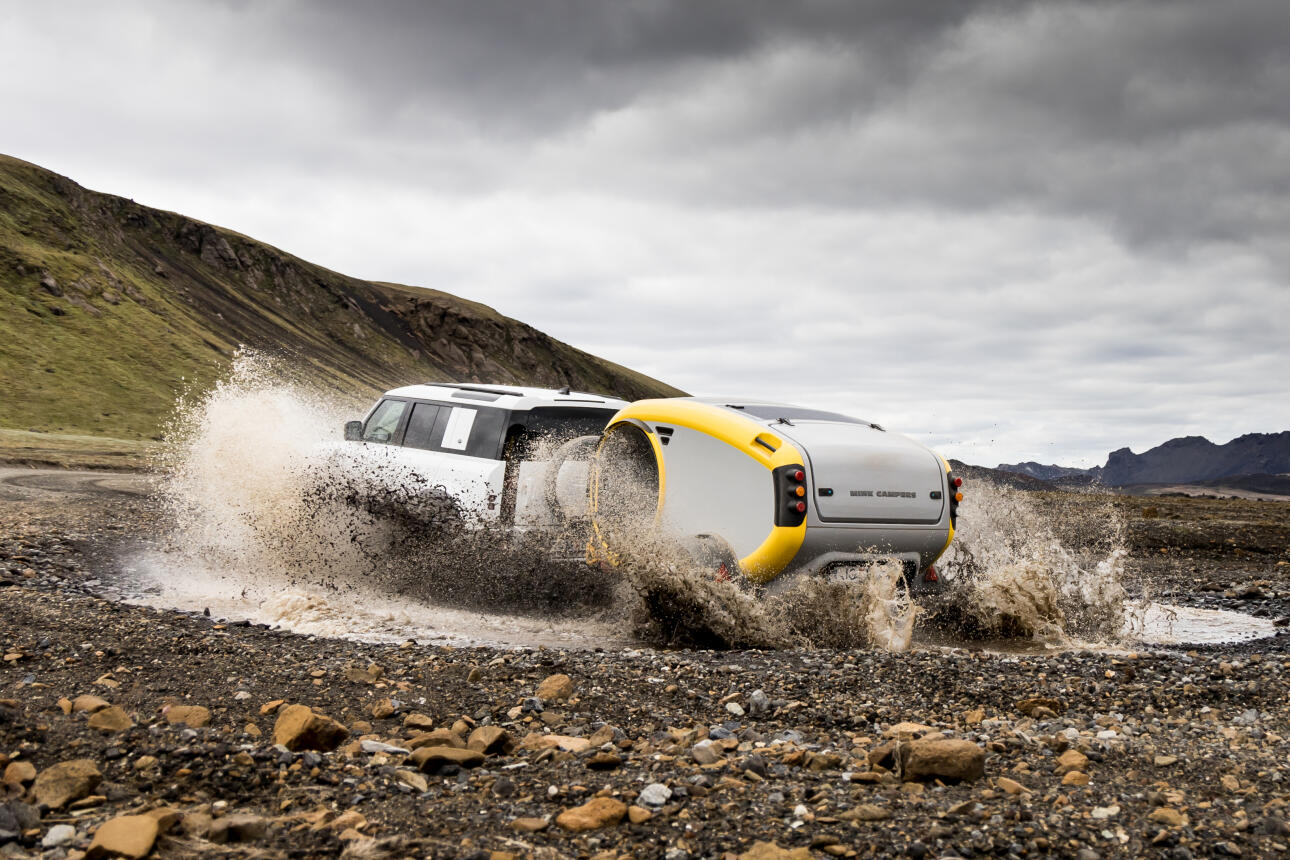
The Icelandic weather was a big concern for the designers of Mink Campers when designing the MINK. In Iceland, the weather can become unruly with heavy wind, which the MINK needs to be able to handle. Thus, aerodynamics played a big role in how the design came about, making it easy to tow in all conditions.
With the growing popularity of EVs in Europe, the camper's aerodynamic features have become even more important. Aerodynamics plays a crucial role in fuel and range efficiency, handling, and the overall driving experience.

In general, when driving at 90 km/h, air resistance, or drag, counts for about 50% of energy use. The height of the vehicle or camper has a direct impact on the air resistance. For instance, a vehicle that is 10% higher than another has approximately 10% higher air resistance. Therefore, a car towing a low camper needs less energy compared to a high camper.
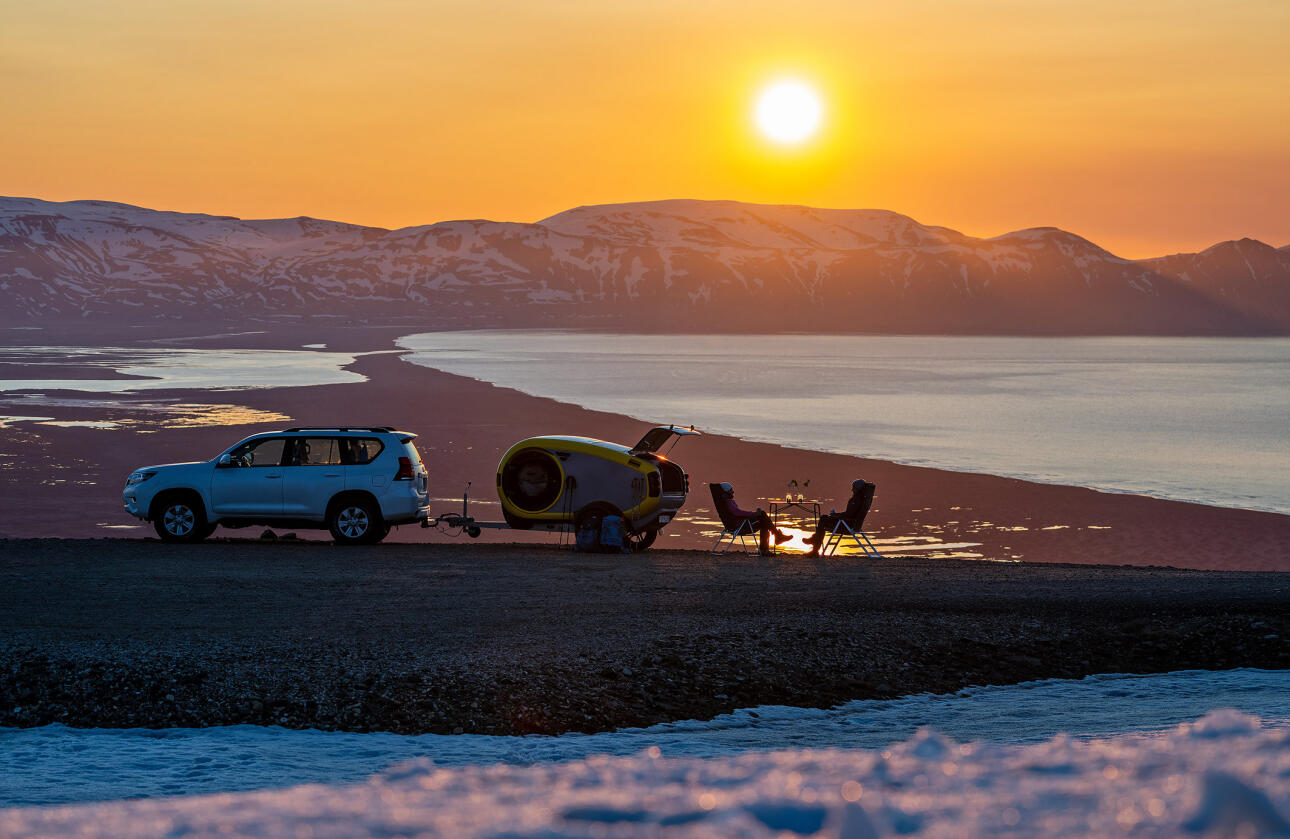
Due to how the MINK is designed - low, smooth and aerodynamically shaped - drag is minimized, and the MINK can achieve superb fuel economy on fossil fuel vehicles and minimize range loss on EVs.
Additional benefits of the design
The low, smooth, and aerodynamically shaped MINK has further benefits beyond fuel economy. The shape also contributes to improved handling and stability, particularly in windy conditions. The camper's low profile and aerodynamic contours help it resist the effects of crosswinds, providing a stable and controlled ride for the driver and passengers. Plus, the camper's height makes it easy to store in a conventional-sized garage.
As the demand for fuel-efficient and eco-friendly recreational vehicles continues to grow, the design of Mink Campers sets us apart from the competition.